

The Mexican airlines pet policy you’ll face depends entirely on which carrier you book. All four domestic airlines take pets, but each sets its own weight limit, its own cap per flight and its own minimum age. An 11 kg (24 lb) dog with its carrier flies in the cabin on Viva Aerobus and is turned away from the cabin on Aeroméxico. That difference decides whether your animal rides at your feet or in the hold.
Aeronotas reviewed the terms and conditions of Volaris, Viva Aerobus, Aeroméxico and Mexicana de Aviación in November 2026. This guide sums up what each one publishes for dogs and cats in the cabin and in the hold, which documents they ask for, and where it pays to call before buying a ticket, because pet spots sell out before seats do.
Mexican airlines pet policy, carrier by carrier
The table lines up the cabin limits each airline publishes. Weight always includes the carrier, and that is where most people slip: weigh the two together, not just the animal.
| Cabin rule | Volaris | Viva Aerobus | Aeroméxico | Mexicana |
|---|---|---|---|---|
| Maximum weight (pet + carrier) | 10 kg (22 lb) | 12 kg (26 lb) | 9 kg (20 lb) | 9 kg (20 lb) |
| Animals accepted | Domestic pets | Dogs and cats | Dogs and cats | Dogs and cats |
| Minimum age | 4 months | 8 weeks | 8 weeks | Not specified |
| Pets per passenger | 1 | 1 | Ask the airline | 1 |
| Pets in cabin per flight | 2 | 6 | Ask the airline | 3 |
| Cabin fee | Airline’s current fee list | Fee in effect at booking | Ask when booking | 880 MXN incl. tax (about 48 USD) |
| Hold (maximum weight) | 45 kg (99 lb) | Ask the airline | 45 kg (99 lb) | 45 kg (99 lb) |
Viva is the most generous on weight and on capacity. Volaris, with just two cabin spots per flight, is where booking early matters most. Aeroméxico and Mexicana share the strictest limit, 9 kg, which rules out almost any medium-sized dog.
Volaris: 10 kg and only two pets per flight
The Volaris pet terms (Spanish PDF) allow cabin travel as long as pet and container together stay under 10 kg. Heavier than that, the animal is checked into the cargo hold of the same flight, up to 45 kg.
Capacity is the weak spot: two pets in the cabin per flight and one per passenger. The container holds a single animal and cannot have a perforated floor, wheels or a lock. Volaris does not accept pets under four months, nursing, sick or aggressive animals, pregnant females or sedated pets, and asks that they wear a collar and leash or harness.
On price, the airline points to its current fee list, the same one used at the counter. Check it when you book; it changes by season.
Viva Aerobus: the highest cabin weight limit
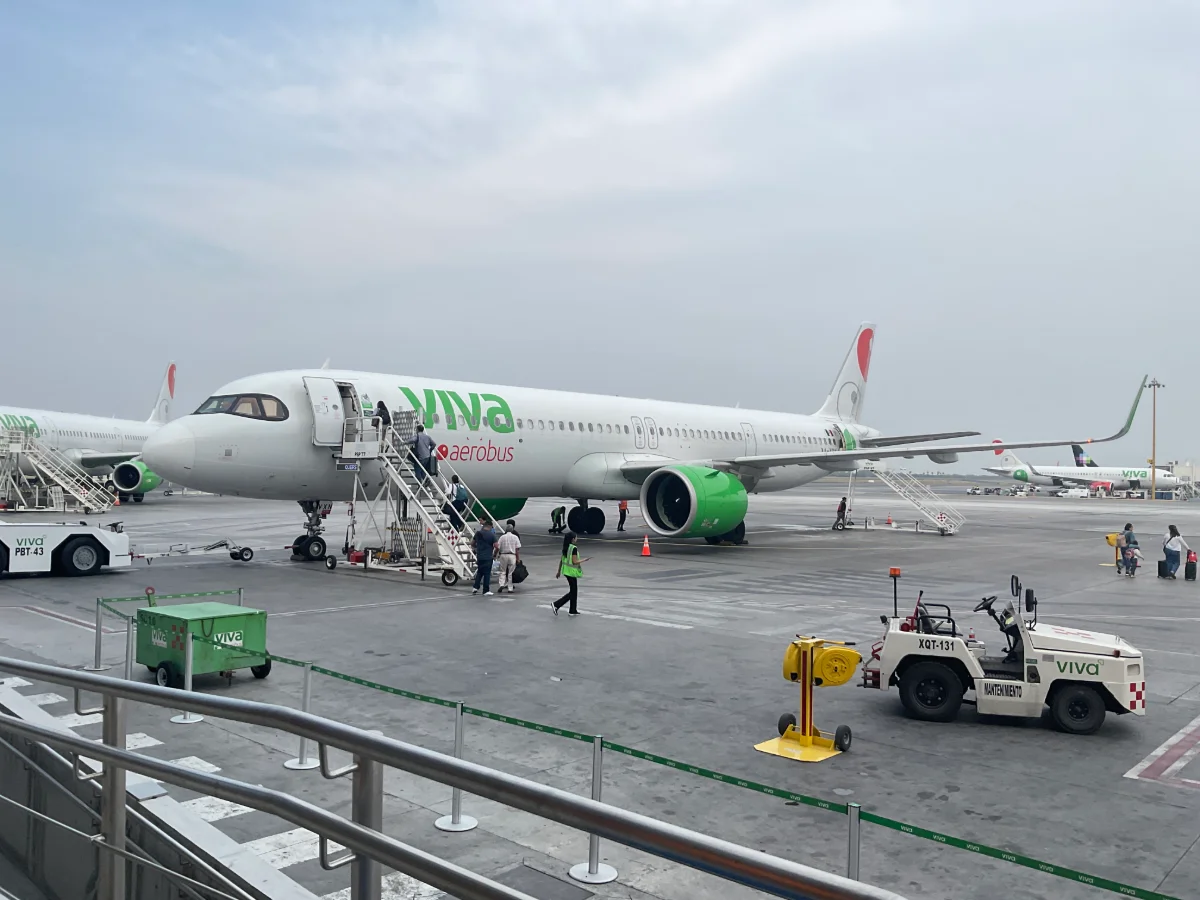
Viva takes dogs and cats up to 12 kg including the carrier, according to its terms and conditions. That is the highest limit of the four.
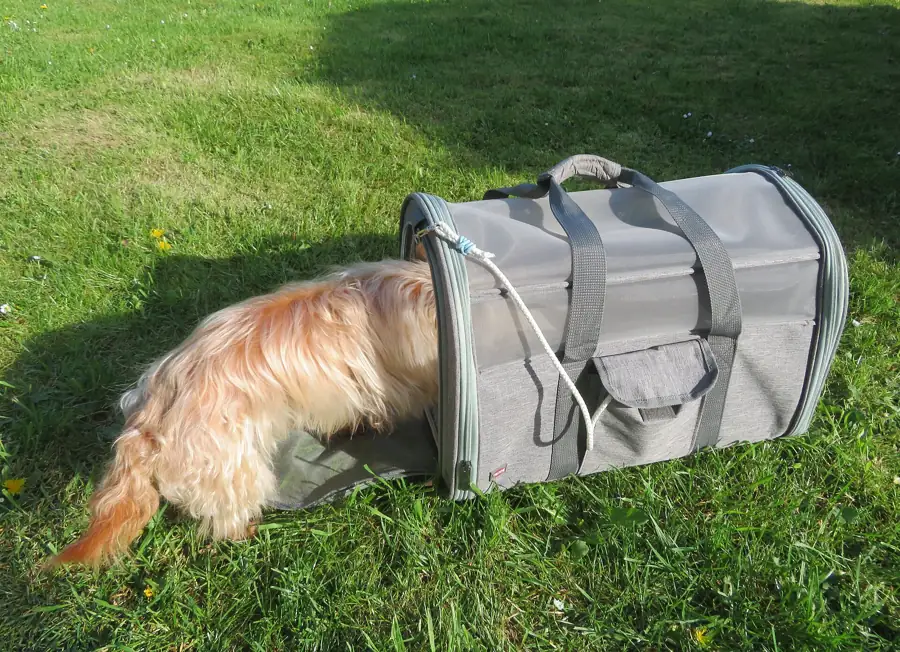
The carrier has fixed dimensions: rigid or semi-rigid, no more than 44 cm long, 35 cm wide and 21 cm high (about 17 x 14 x 8 in), with absorbent material inside. One animal per passenger, up to six per flight. Minimum age is eight weeks. Viva charges the fee in effect at the time of service and does not list an amount in its terms, so you see the price when you add the pet to your booking.
Watch the height. An 11 kg dog meets the weight rule but rarely fits lying down in 21 centimeters. The tape measure matters as much as the scale.
Aeroméxico: 9 kg and more than one version of the rule
Aeroméxico’s pets on board page sets the cabin limit at 9 kg including the carrier, for dogs and cats that travel under the seat in front. It does not accept animals younger than eight weeks or exotic species. In the hold, the cap is 45 kg with the crate.
Aeroméxico publishes its rules on separate country sites, and they don’t all agree on details such as carrier dimensions or the number of pets per flight. The safe move is to confirm with the airline on its Mexico site before you buy, especially with a connection or an international destination.
Mexicana de Aviación: the only one with a published price
Mexicana’s terms accept domestic dogs and cats in the cabin up to 9 kg for pet and carrier combined, stowed under the seat in front for the whole flight. One pet per passenger and up to three per flight, subject to availability. Passengers with a pet cannot sit in an exit row, and unaccompanied animals are not accepted.
The cabin fee is 880 pesos including tax, roughly 48 US dollars. None of the other three lists a fixed figure in its terms. If the pet exceeds the cabin weight or size, it travels checked, up to 45 kg including the carrier.
Cabin or cargo hold: how to decide
The scale makes the call. A cat or small dog fits in the cabin on any of the four. Between 9 and 12 kg, only Volaris (up to 10) or Viva (up to 12) keep it on board. Above that, the hold is the only option, with a common 45 kg ceiling at the airlines that publish one.
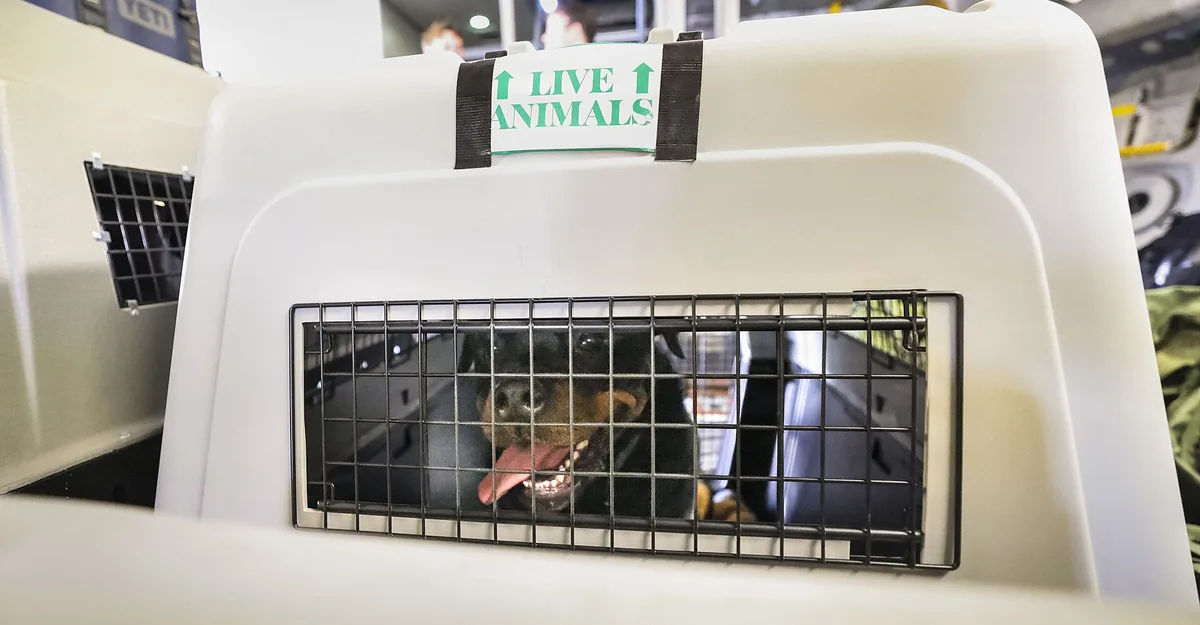
If your pet has to go below, confirm with the airline that your exact route accepts animals in the hold on your travel date before paying, and pick a nonstop flight if you can.
Documents for flying with a pet in Mexico
On domestic flights, the minimum is a health certificate issued by a veterinarian and an up-to-date vaccination record. Volaris puts it in writing: no pets without valid vaccination and health certificates. Viva recommends carrying a printed certificate of good health on the day of the flight.
Bring your own original ID documents for flying in Mexico (in Spanish) too. Pets are checked in at the counter, so online check-in alone won’t do: arrive earlier than usual.
If the flight goes to the United States
For dogs, the destination country’s rules outweigh the airline’s. The US CDC requires every dog entering the country to be at least six months old, carry a readable microchip, arrive healthy and travel with the CDC Dog Import Form receipt.
Extra requirements depend on the countries the dog has been in during the previous six months. Before booking, check on the CDC site which category applies, because a four-month-old puppy that Volaris would take on a domestic flight cannot enter the United States.
What to do before you buy
- Weigh the pet inside its carrier and measure the carrier. That alone tells you which airlines are an option.
- Call or add the pet when you book. With two spots per flight on Volaris and three on Mexicana, capacity runs out first in peak season, as on Christmas flights (in Spanish).
- Don’t sedate it. Volaris bans it outright.
- Check your fare’s allowance. The in-cabin carrier may count as your carry-on; compare it with each airline’s carry-on size limits (in Spanish).
- Keep the fee receipts. If the airline refuses to board a pet that met the rules, your air passenger rights (in Spanish) still apply.
One last wrinkle. Volaris and Viva are preparing their merger (in Spanish), and for now they keep different pet rules: 10 kg against 12, two spots against six. If they unify them, check which version survives.
Frequently asked questions
Which Mexican airline allows the heaviest pets in the cabin?
Viva Aerobus, at 12 kg for pet and carrier combined. Volaris follows at 10. Aeroméxico and Mexicana stop at 9.
How much does it cost to fly with a pet in Mexico?
Only Mexicana publishes a fixed amount: 880 pesos including tax (about 48 USD) for an in-cabin pet. Volaris, Viva and Aeroméxico charge from their current fee lists, shown when you add the pet to your booking.
Can my pet sit on the seat or on my lap?
No. On all four airlines the pet stays inside its carrier, under the seat in front, for the entire flight.
How old does a puppy have to be to fly?
Eight weeks on Viva and Aeroméxico, four months on Volaris. To enter the United States, the CDC requires dogs to be six months old.
Recommended reading
- Volaris Online Check-In: When It Opens and How It Works
- Carry-on size limits: Volaris, Viva, Aeroméxico and Mexicana (Spanish)
- Documents to fly in Mexico: ID, minors and foreigners (Spanish)
- Air passenger rights in Mexico: delays and refunds (Spanish)